

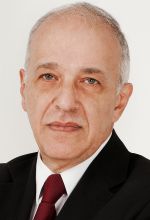
 XPRIMM: How do you comment the results achieved by your market in the first half of 2015 in terms of development and profitability?
Ioseb GOGOLASHVILI: There was GEL 208 million of insurance premiums attracted by the insurance companies during the first quarter of 2015, which is with 23% higher than in the last year (the state healthcare insurance program is not included in the last year's data, which was completed in the second quarter of 2014). The growth of written premiums is noticeable almost in every insurance product, as well as in: Motor Hull up by 42%, MTPL insurance up by 63%, Property insurance up by 24%. It is worth mentioning that there aren't any type of compulsory laws operating in the country, which is one of the determining factor that in 2014 insurance GPW was 1.2% of the GDP. This data is significantly behind the similar data of EU countries.
Net loss of insurance companies in the first quarter of 2015 amounted to GEL 2.3 million, compared with the same period last year, while net profit amounted to GEL 8.9 million. This is due to various factors, including the increasing of administrative expenses of insurance companies by GEL 4.6 million (including wages and commissions) and decreasing of income by GEL 5.9 million from the subsidiaries and liaison companies (which in turn is caused by one of the insurance company, having separated from a non-insurance profitable subsidiary company).
XPRIMM: Last year, in Georgia, was introduced the pilot program regarding AgroInsurance. Have you identified any positive and/or negative sides during the implementation of this program?
I. G.: In 2014, an agro-insurance pilot program initiated by the Government was launched. The program's targeted segment is small and medium farming, which the state offers to subsidize with 70%-80% of the insurance premium. Five private insurance companies are participating in this program.
As you know, Agro-insurance is one of the most difficult types of insurance. Besides, it is not very popular in our country. Also, there were revealed some kind of deficiencies during the implementation of the program. It is worth mentioning that the identification and analysis of the problems are performed during the implementation of the program and the elimination mechanism is also created in timely manner. As a result, in 2014, within the agro-insurance program there were issued more than 21 thousand policies, more than GEL 150 million value; 34 different crops on 19 thousand hectares of land were insured. There is an active cooperation between the persons employed by the state, the insurance industry and the agro sector, which contributes to the efficiency of the agricultural insurance program.
XPRIMM: What are the main opportunities offered by the AgroInsurance program?
Ioseb GOGOLASHVILI: As it was mentioned, the agro-insurance program is intended for small and medium farming, for which the losses occurred during various natural disasters have a crucial impact in terms of business interruption. A significant part of the insurance premium subsidized by the government is for most of these farmers quite an important factor, in terms of accessibility.. Concurrently, the persons involved in agricultural activities are offered by the government a very good opportunity to protect themselves from the possible catastrophic loss consequences with the minimum expense.
On the other hand, this form of participation of the government in the insurance field is a very good stimulus for the development of the insurance sector.
This year turned out to be quite busy in terms of natural disasters. Though, taking into consideration the data losses settled by the participant insurance companies in agro-insurance, most of the insured shall be able to continue the farming again with minimum losses. Besides the farmers, this has has a positive effect on the country's economy and population, who are, mainly, the consumers of local agricultural products.
XPRIMM: On June 13th in Tbilisi was affected by heavy rain and landslides. What is the size of insured/uninsured damages (on property, motor insurance and other lines of insurance)?
Ioseb GOGOLASHVILI: The total loss as a result of the natural disaster occurred in Tbilisi on June, 13th 2015 amounted to about GEL 100 million, while the losses of insurance companies amounted to about GEL 4.5 million, of which 70% consisted of property insurance losses and 30% consisted of motor vehicle insurance losses.
XPRIMM: How do you evaluate the impact of these damages on the insurance industry and reserves of insurance companies?
Ioseb GOGOLASHVILI: Almost none of the insurance companies had reinsured their motor vehicle insurance business. As far as the losses reported on the property insurance, the most part of the loss was reinsured by international reinsurance companies, and consequently the solvency of the insurance companies was not threatened.
XPRIMM: Are the insurance industry and population of the country ready to withstand such catastrophic events?
Ioseb GOGOLASHVILI: Considering the country is situated in a high-risk natural disasters zone, it is naturally difficult for the country's population to deal with this type of large-scale catastrophic events without the state's support. Consequently, consultations are being conducted with the international organizations. Moreover, the state is determining the directions of the natural disaster control system within the country.
As for the insurance industry's ability to cope with natural disasters, the recent catastrophes have proved that the insurance companies have properly settled all their losses with the help of appropriate reinsurance mechanisms.
20814 views

